
· by Michael Blair, Nashville's HVAC
A properly sized system in a Nashville summer should run in long, steady cycles, long enough to pull moisture out of the air as well as heat. When it kicks on, runs two or three minutes and shuts down, then does it again ten minutes later, that is short cycling. It costs more to run, since the Department of Energy’s fact sheet on right-sizing heating and cooling equipment says excessive cycling reduces the efficiency of an air conditioner, furnace or heat pump, and it leaves the house clammy. The same fact sheet says more starts and stops accelerate wear and can lead to premature failure. The causes sort into three groups: airflow, controls and refrigerant, and sizing.
Airflow problems, which are the cheap ones
A clogged filter, a blocked return, closed supply registers or a matted evaporator coil all cut the air moving across the coil. On cooling, DOE’s Building America guide to air conditioner diagnostics says a fouled evaporator reduces airflow and will eventually cause the coil to freeze over, and an iced coil stops cooling until it thaws, which our post on an air conditioner that freezes up goes through step by step. On a furnace, weak airflow is one of the things that can trip a safety switch and shut the burner off until it cools.
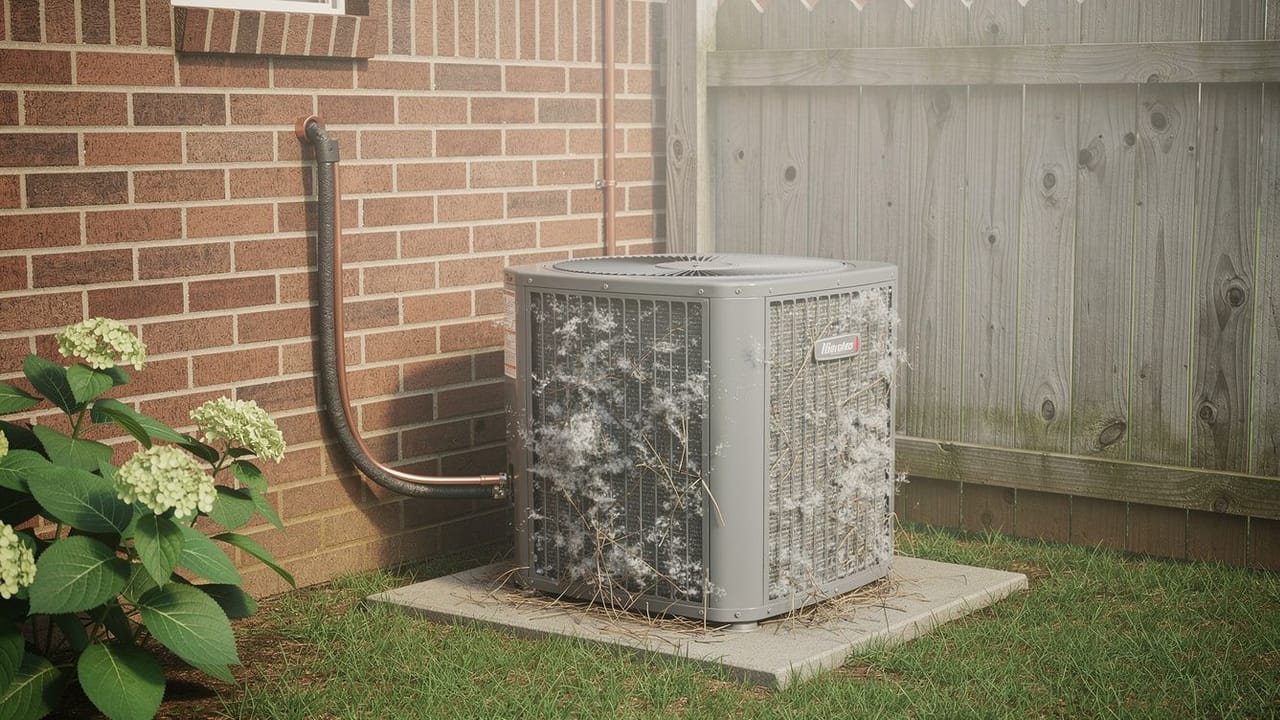
Check the filter first. DOE’s Home Cooling 101 guide says a clogged filter restricts airflow and reduces the unit’s ability to cool, and it tells owners of a split system to clear debris and leaves from the fan, compressor and condenser outside. Around here that means cottonwood fluff, grass clippings and the fence somebody built too close. When a furnace short cycles only after the blower has run a while, we look at the limit switch and the airflow before anything else on a furnace repair call.
Controls and refrigerant
A thermostat mounted where a supply register blows on it, or in afternoon sun, can be reading air the rest of the house never feels. The Home Cooling 101 guide says to check that the thermostat is set properly and reading the correct temperature, and that it may need new batteries or replacing outright. Moving a badly placed one can help, and so can a look at the cycle-rate setting on the models that have it. Loose thermostat wiring and a failing control board go on our list as well, especially when the pattern comes and goes.
Low refrigerant charge comes from one of two places, according to the Building America guide: a leak, or a long line set where no extra refrigerant was added at installation. The guide also links coil freezing to low charge, and the Home Cooling 101 advice is to have a trained technician repair the leak and then recharge, because topping up a leaking system only puts the problem off. The same Building America guide names contactors, capacitors, condenser fan motors and compressors among the faulty parts behind unreliable equipment, and testing them is routine on our AC repair visits.
- Filter, returns and registers: clear them and try again
- Thermostat location and cycle-rate setting
- Outdoor unit clear of debris and plant growth
- Refrigerant charge, and the leak or short charge behind a low one
- Capacitor, contactor and the furnace limit switch
Can an oversized system cause short cycling?
If none of the above applies and the unit has cycled short since it was installed, oversizing is the next suspect, and a load calculation settles it. An oversized air conditioner reaches the setpoint fast and shuts off before it has run long enough to wring out the humidity. ICC NTA’s code outreach note on HVAC sizing puts it plainly: equipment that short cycles does not efficiently remove humidity, so people end up setting the thermostat cooler to feel comfortable. That is how a house gets cold and damp at the same time.
Oversizing is common nationally. In one large survey cited in the DOE right-sizing fact sheet, nearly 40 percent of contractors said they oversized on purpose, giving reasons such as “to reduce call backs” and “customers demanded it.” A house can also drift into it later; the Building America guide warns that improvements to the building envelope and ductwork lower the load, which can leave a unit that once fit running short cycles.
The honest fix is a properly sized replacement when the system is due, based on a load calculation rather than the size of what was there. The DOE fact sheet tells homeowners to insist on documented sizing calculations using ACCA’s Manual J and to be wary of estimates from floor area or a contractor’s experience, which is how we size a system replacement. Until then, a variable-speed air handler helps, since the fact sheet notes many of them ramp the blower up slowly in humid climates for better dehumidification. On some equipment a technician can lower the blower speed too; the Building America guide says latent capacity rises as airflow falls, but too little airflow freezes the coil, so that setting gets measured. A whole-house dehumidifier is another way to handle the moisture short runs leave behind, which our post on a house that feels clammy at 72 degrees covers.
Why does short cycling matter beyond the power bill?
Each start is wear the equipment did not need. The Home Cooling 101 guide says compressor and fan controls can wear out from a system turning off and on too frequently, and a unit that starts far more often than it should ages faster than one running long, even cycles. The bigger cost in this climate is humidity. A coil needs run time to shed water, and short cycles cut that time off, so the house can sit above the 30 to 50 percent relative humidity the EPA’s mold course calls ideal, against its advice to stay below 60 percent. Damp air like that can contribute to mold on closet walls and a musty smell at the return, though the Building America guide names a plugged condensate drain as another cause of mold, so we check the drain too.
If a technician clears the airflow and the controls and the pattern continues, ask for the load calculation. The Building America guide lists a condensing unit oversized by incorrect initial sizing among the signs it should be replaced, and no service call changes its size. When you want that calculation done on your house, ask us for a free written estimate.
Sources
- U.S. Department of Energy, Right-Size Heating and Cooling Equipment (Technology Fact Sheet) — Excessive cycling reduces efficiency; more starts and stops accelerate wear; oversizing common, nearly 40 percent of surveyed contractors oversized on purpose; insist on Manual J; variable-speed air handlers in humid climates
- U.S. DOE Building America, Measure Guideline: Air Conditioner Diagnostics, Maintenance, and Replacement (2013) — Fouled evaporator freezes the coil; undercharge from leaks or long line sets; faulty contactors, capacitors and compressors; latent capacity and airflow; post-retrofit oversizing; plugged condensate drains and mold; oversized unit as a reason to replace
- U.S. Department of Energy, Energy Saver 101: Home Cooling (2016) — Clogged filter restricts airflow; clear debris from the outdoor unit; check the thermostat; repair the leak and recharge; controls worn by frequent cycling
- ICC NTA, New York requirements for sizing HVAC systems (2019) — Short-cycling equipment does not efficiently remove humidity, leading to a cooler thermostat setting
- U.S. EPA, Mold Course Chapter 2: Why and Where Mold Grows — Indoor relative humidity below 60 percent, ideally 30 to 50 percent
FAQ
Why Your Air Conditioner or Furnace Short Cycles — questions
Is short cycling bad for my air conditioner?
Yes. Frequent starts add wear to the compressor and to controls like the contactor, and the Department of Energy ties more starts and stops to premature failure. It also leaves the house humid because the system never runs long enough to dehumidify properly.
Can a dirty filter cause short cycling?
Yes, and it is one of the common causes and the cheapest to rule out. Restricted airflow can freeze the evaporator coil on cooling, and weak airflow can trip a furnace safety switch on heating, and either way the system stops until it recovers. Replace the filter and check the returns before anything else.
How do I know if my system is oversized?
It cools the house quickly but the house feels damp, cycles have been short since it was installed, and the equipment is larger than a Manual J load calculation for the house would call for. A technician can run that calculation; the size of the old unit is not evidence of the right size.
Why is my furnace short cycling?
Rule out weak airflow first: a clogged filter, a blocked return or closed registers can let the furnace run hot enough to trip a safety switch, which shuts the burner off until it cools. A thermostat beside a supply register, loose wiring, a failing control board or an oversized furnace can cause it as well.